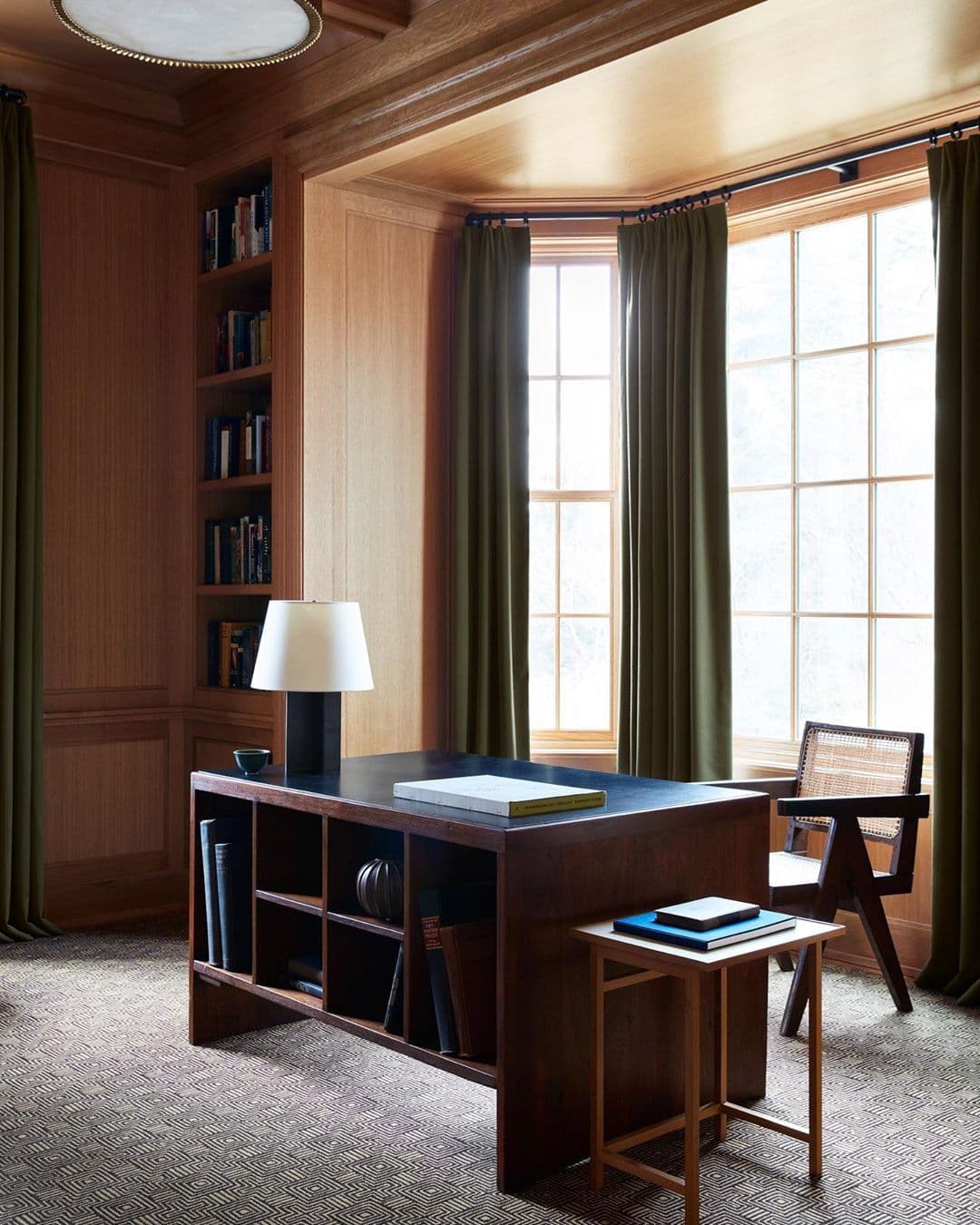
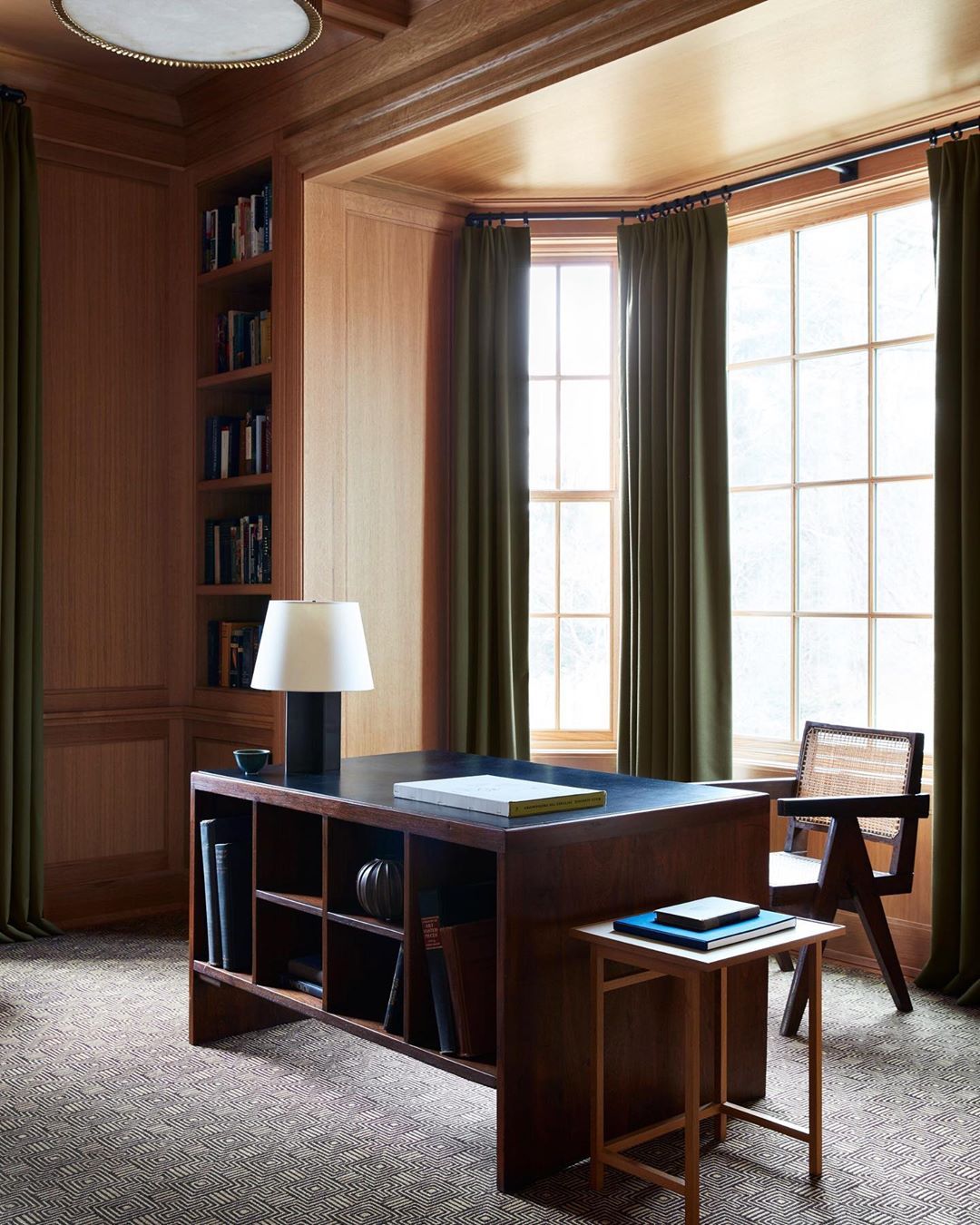
PJ-BU-02-A · 1950-1959
Pigeon Hole Desk
Pierre Jeanneret
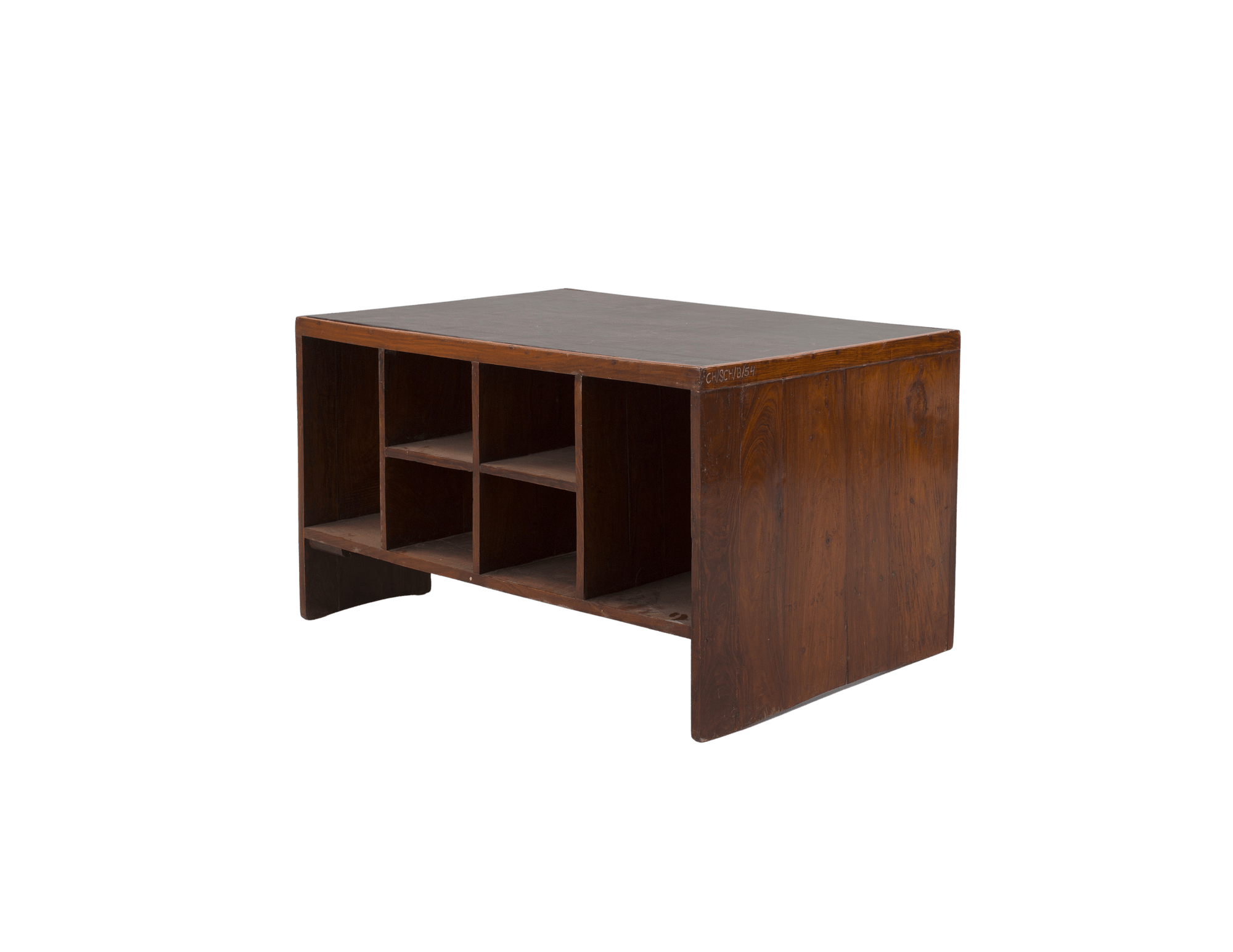
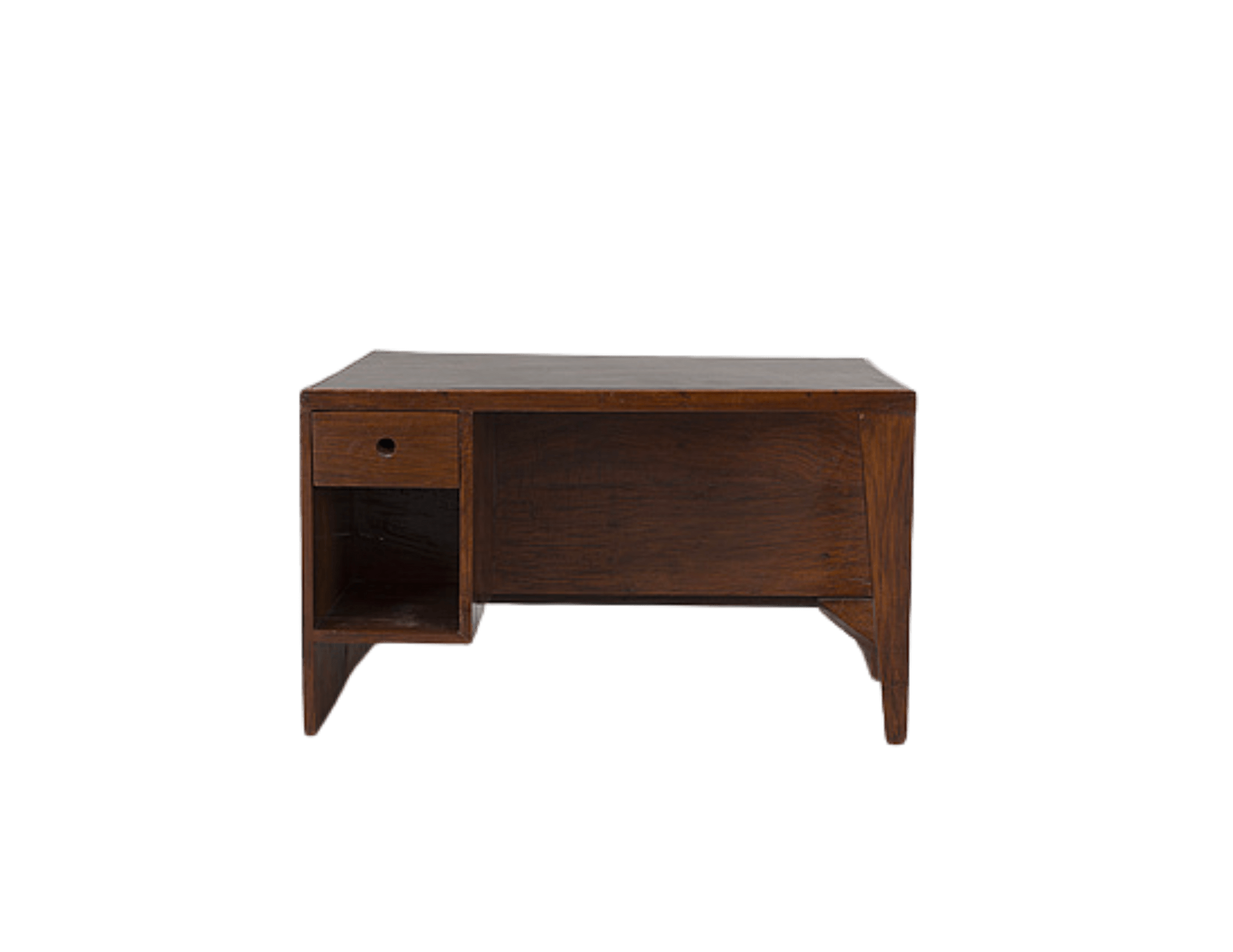
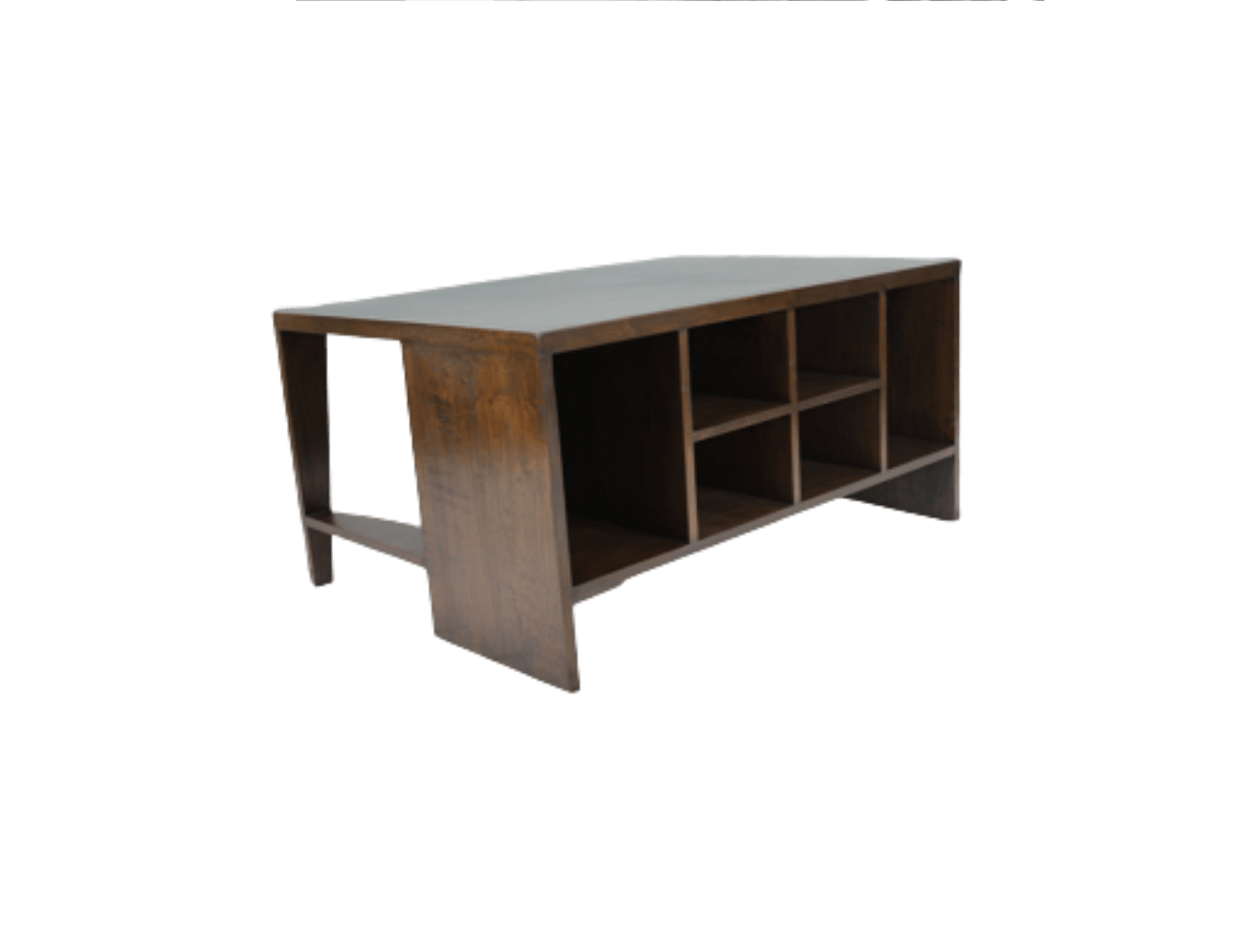
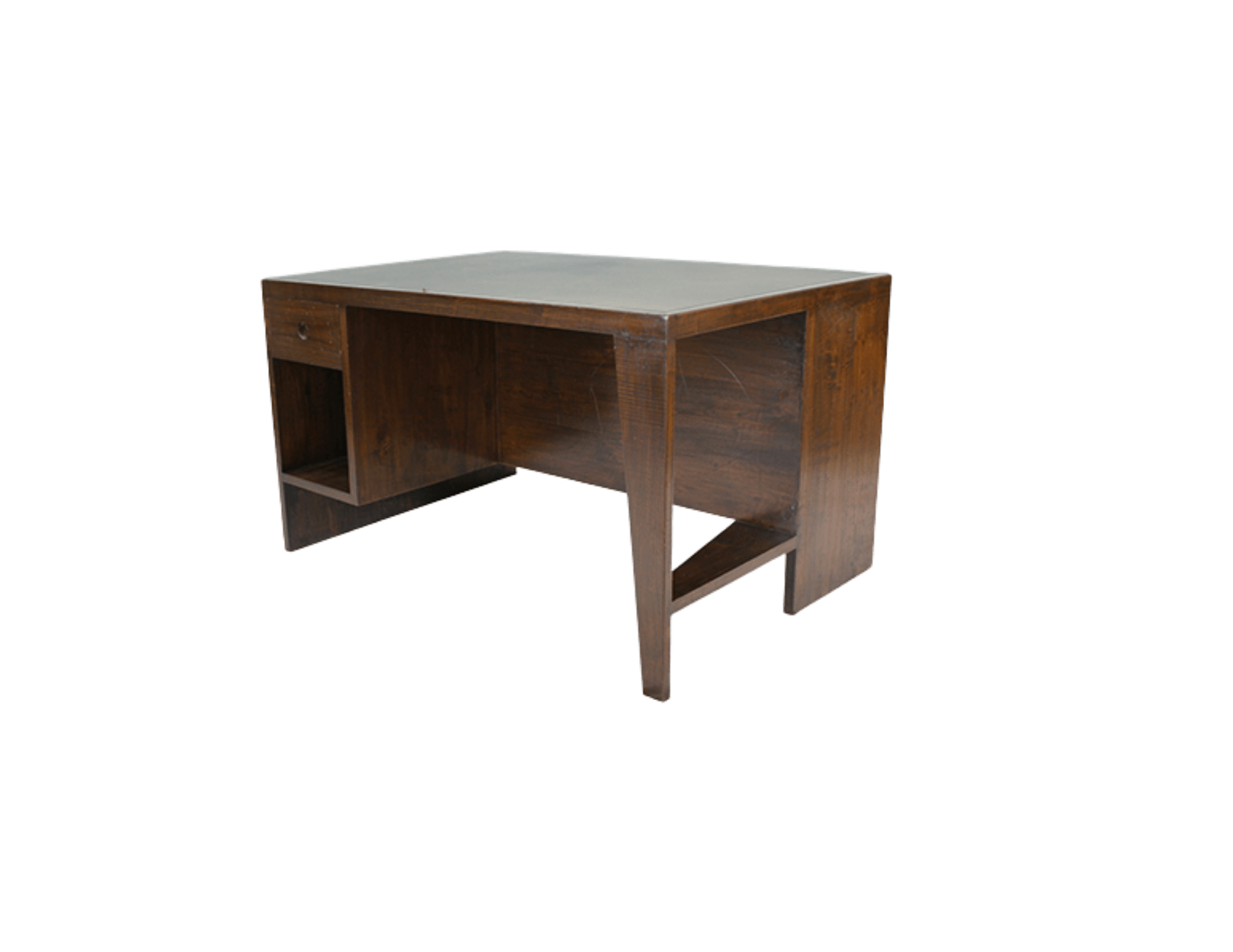
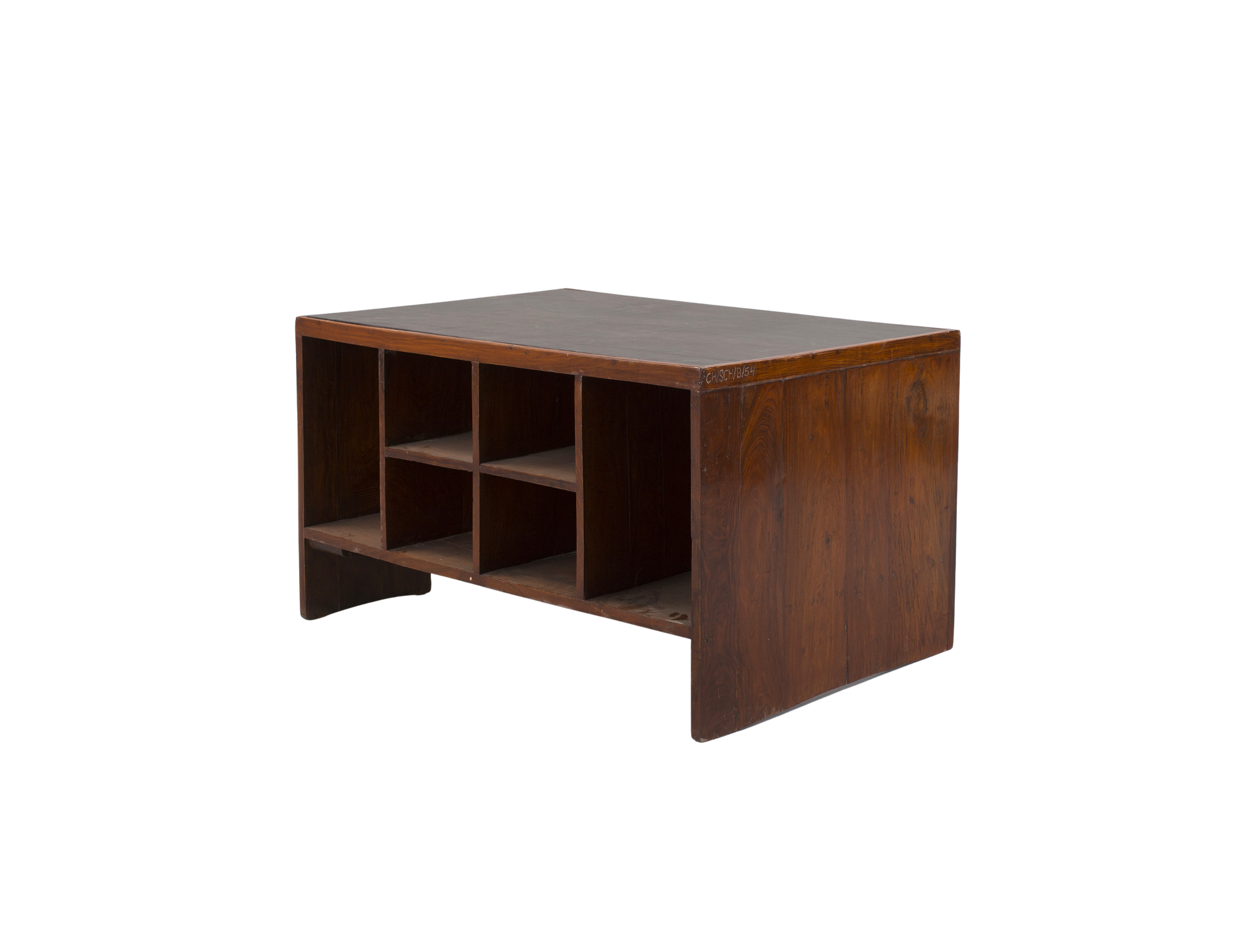
Six open compartments on the back, one deep drawer at the front, and a slab of teak the full width of the desk holding up one side. The PJ-BU-02-A is the piece people picture when they picture Chandigarh.
€6,900
Shipping worldwide included
Four views
In three dimensions
Drag to turn the piece. Scroll to come closer.
I · The brief
A city that had to furnish itself
When Punjab was divided in 1947 it lost its capital to Pakistan, and India set about drawing a new one on open farmland at the foot of the Shivaliks. Nehru asked for a town “symbolic of the freedom of India, unfettered by the traditions of the past.” Le Corbusier took on the plan and the monuments. His cousin Pierre Jeanneret took on everything else, and stayed for fifteen years to see it built.
Furnishing it was not a separate commission so much as an unavoidable consequence. Thousands of rooms were going up in concrete at once, and nothing existed to put in them. Importing was slow and expensive. So the furniture was drawn on site, in teak and cane, to be made by carpenters already working within a few hours of the city.
II · The drawing
Storage on the side nobody sees
The desk's whole argument is on its reverse. A six-part pigeonhole bookcase runs the full width, open and shelf-deep, facing whoever stands on the other side of the desk. Files go in from the front of the room, not from behind it. It is an administrator's desk that also serves the queue.
At the user's side there is a single deep drawer and an open cubbyhole beside it. Nothing locks. Nothing is concealed. The structure does the decorating: one end is carried on a slab leg the full depth of the top, the other on a tapered leg paired with a smaller slab, so the desk reads differently from each side without ever losing its balance.
III · The material
Teak, cut thick and left alone
Jeanneret worked in Burmese and Indian teak because it was what the region had, and it turned out to be the right answer for a climate that swings from forty-five degrees to monsoon damp. Thick sections, visible joinery, a finish that darkens rather than fails.
Our re-editions are made from teak grown in northern India and finished by hand. The grain is left legible. Over a decade the surface deepens from honey to a dark, even brown, the colour the originals have now.
IV · After the offices
From municipal store to the saleroom
For decades these desks simply worked. They were moved between departments, repainted, stacked in godowns when offices were modernised, and in some cases sold off by weight. The rediscovery came late, through dealers and auction houses, and the prices that followed put the originals out of most rooms for good.
A faithful re-edition is the honest answer: the same drawing, the same material, the same proportions, made by people who do this every day rather than recovered from a municipal store.
“A modest masterpiece, where form seamlessly aligns with function.”
In rooms
Specification
- Width
- 122 cm
- Depth
- 84 cm
- Height
- 72.5 cm
- Solid teak throughout, including the pigeonhole carcass.
- Hand-cut joinery; the structure is the only ornament.
- Available in the wood finish of your choice.
- Made to order in eastern India. Allow 10 to 12 weeks.
All items are made of teak wood from northern India and, if applicable, of natural cane. All items can be made in the wood finish of your choice.
A faithful vintage re-edition of the PJ-BU-02-A blueprint, designed in 1950-1959. Re-editions conform to originals and are handcrafted in India. Read how we work.
The price includes shipping worldwide. Pieces are made to order; we will confirm a lead time and a delivery window when you enquire. Shipping & returns.
Drawn for the same rooms
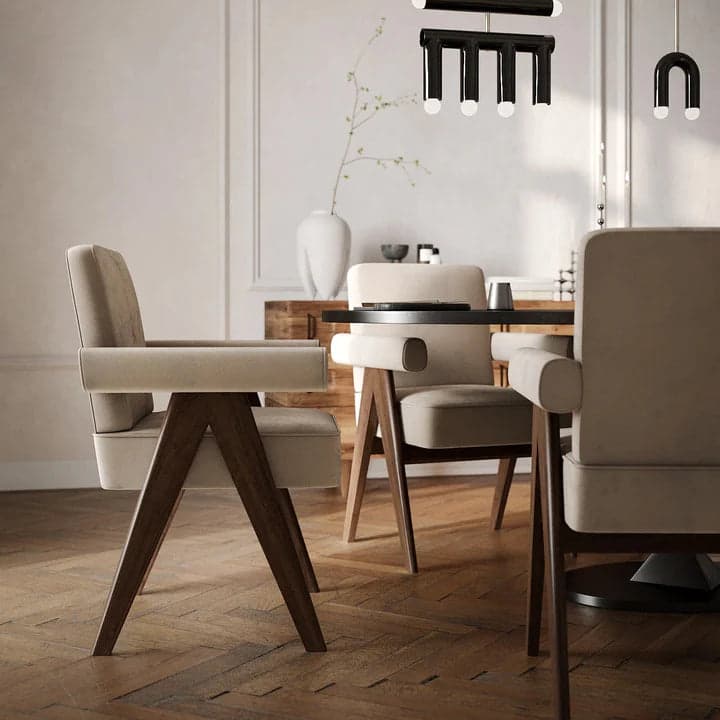
PJ-SI-30A
Pierre Jeanneret, The Senate Chair
€1,900
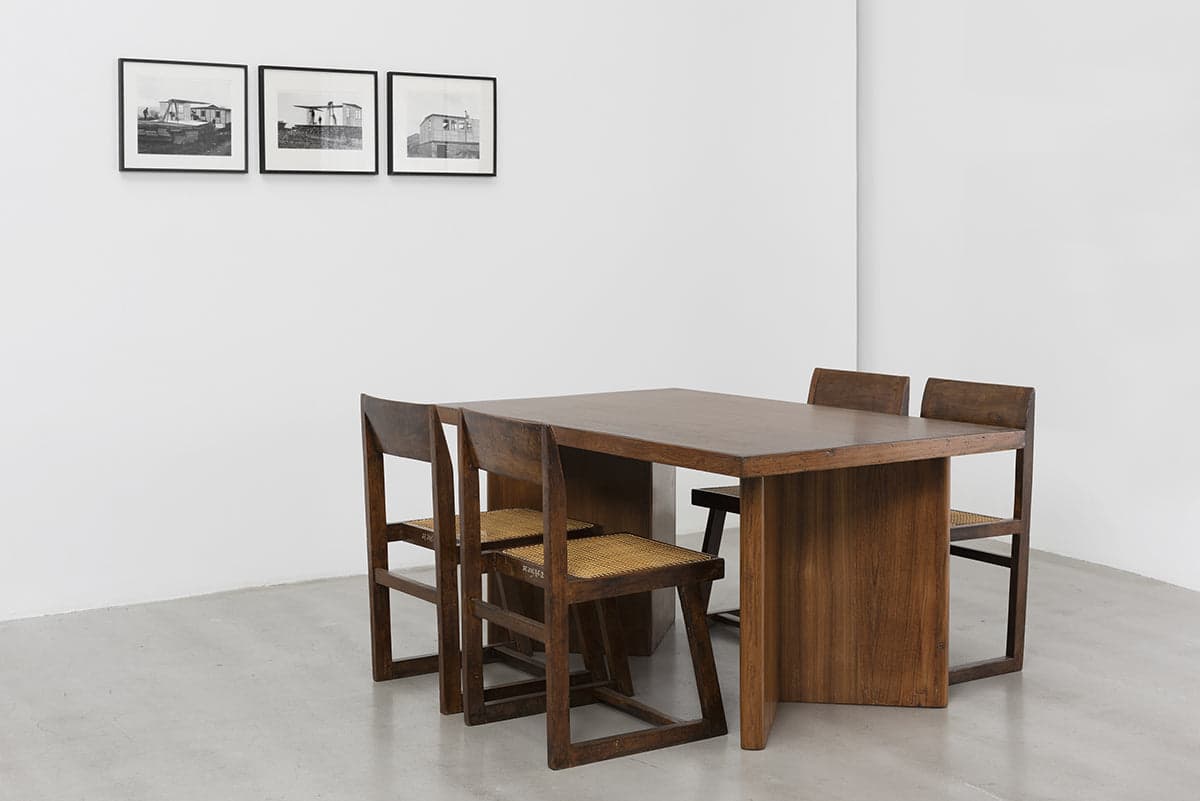
PJ-TAT-10-A
Pierre Jeanneret, Table de Lecture
€6,200
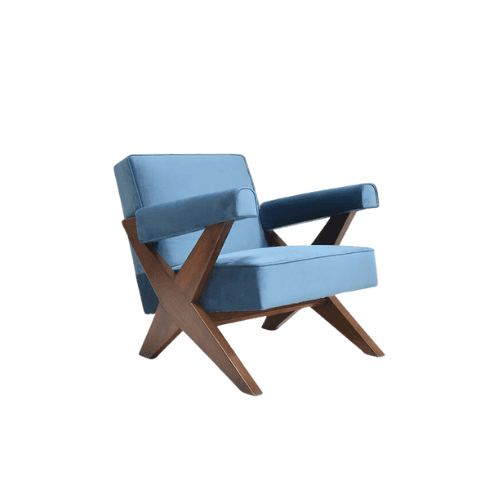
PJ-SI048A
Pierre Jeanneret, X Leg Lounge Armchair
€3,500
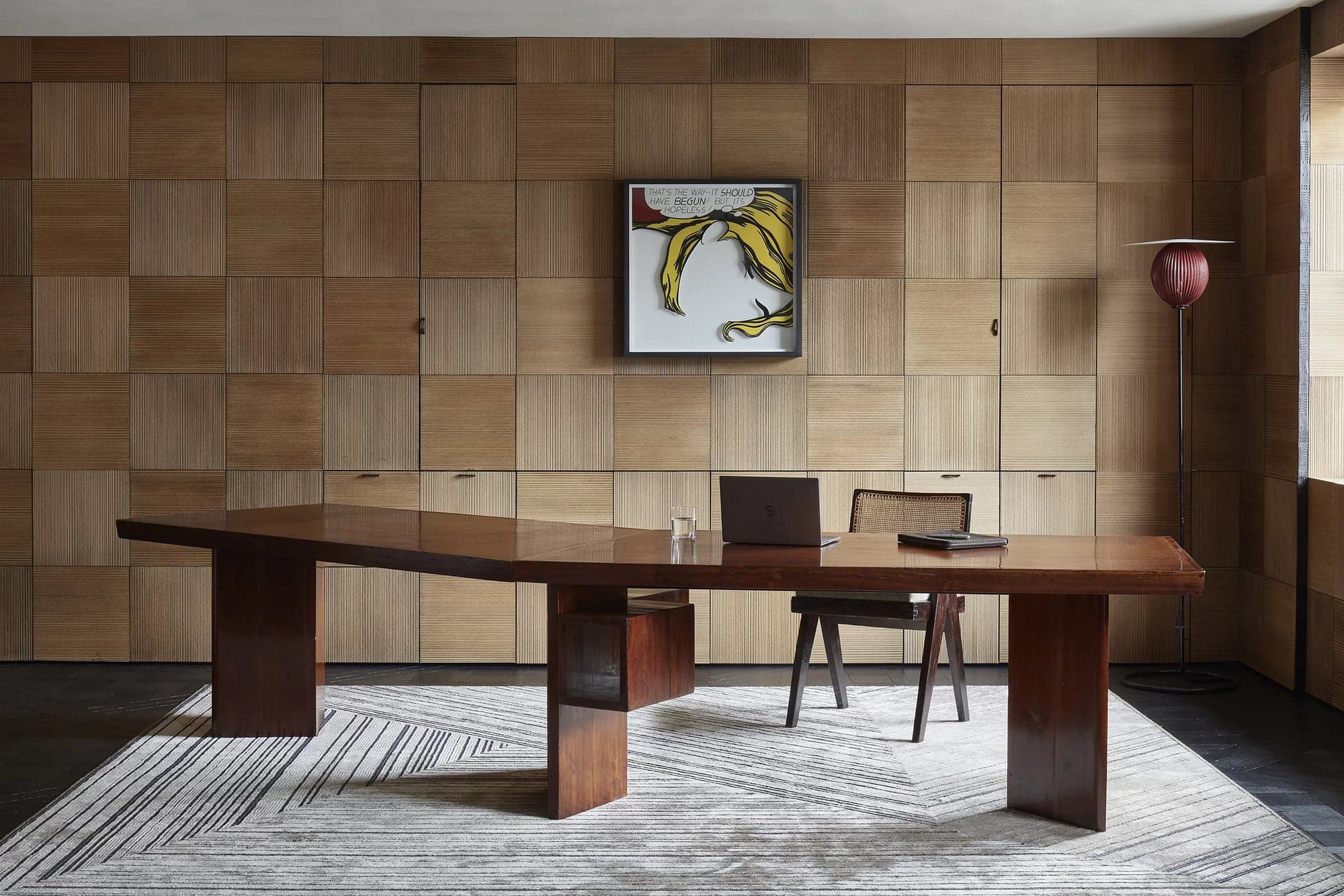
LC-TAT-07-A
Le Corbusier, Bureau des Ministres
€9,900