Pierre Jeanneret & Le Corbusier
Our Story
Pierre Jeanneret & Le Corbusier
Two cousins, and the city that outlived them
The furniture in this catalogue was not drawn for collectors. It was drawn by a man who had moved to the other side of the world to build a city, for the clerks, judges and students who were going to work in it.
1922
Two cousins, one studio
Charles-Édouard Jeanneret had already renamed himself Le Corbusier when, in 1922, he opened a studio at 35 rue de Sèvres in Paris with his cousin Pierre. Le Corbusier was thirty-five and wrote the manifestos. Pierre was twenty-six and made them stand up: the structure, the details, the drawings that had to survive contact with a builder.
For eighteen years the work went out under both names: the Pavillon de l'Esprit Nouveau, the Villa Savoye, and, after Charlotte Perriand joined them in 1927, the tubular steel furniture still in production a century later.
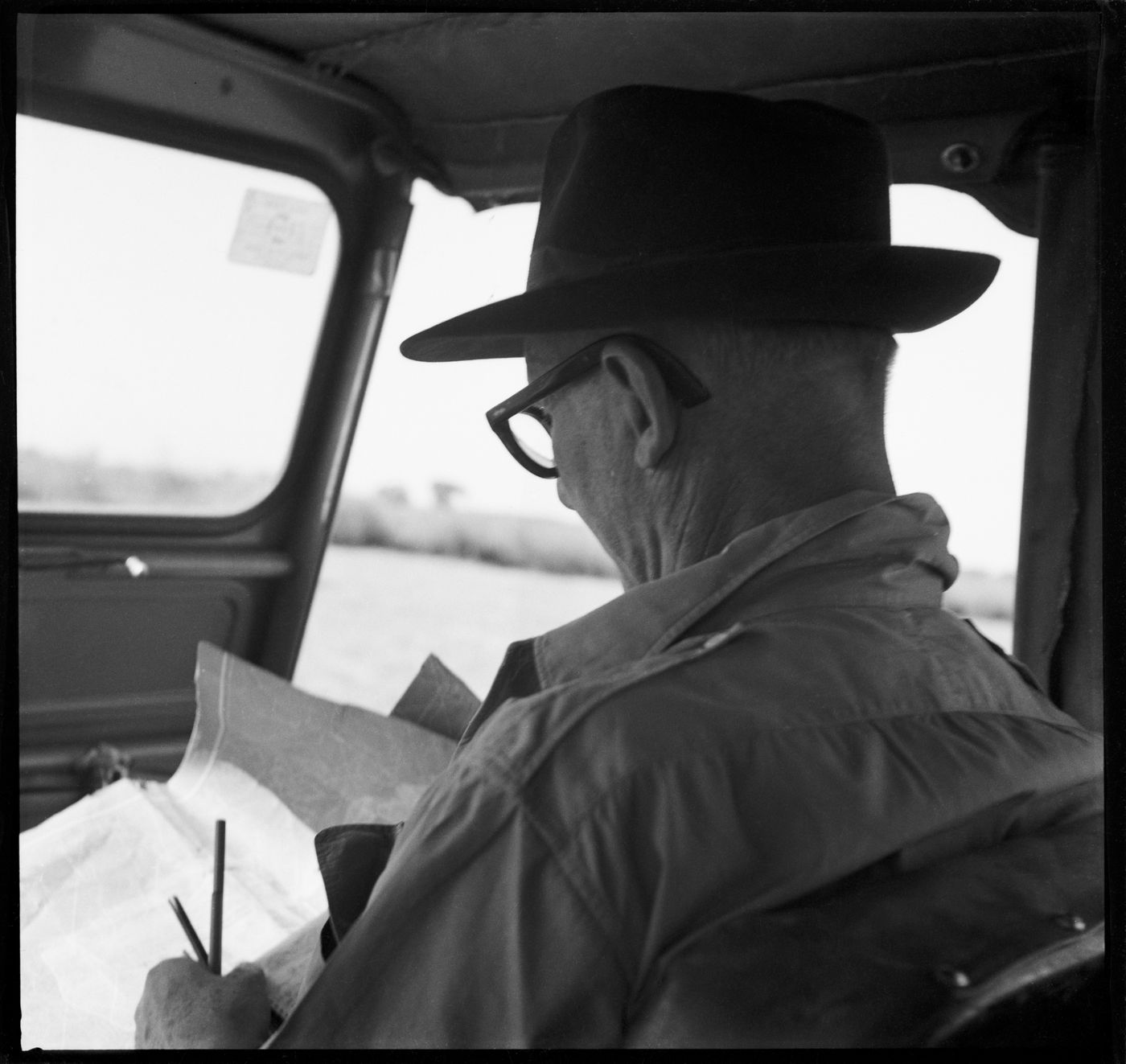
Le Corbusier arriving on the Chandigarh site.
Photographer unknown, 1951 · CCA collection
1940
The war put them on opposite sides
When France fell, the partnership ended badly. Le Corbusier went to Vichy, chasing commissions from a government that never gave him any. Pierre went the other way, into the Resistance and into Jean Prouvé's workshops in Grenoble, building prefabricated shelter out of whatever the occupation had left behind.
They did not work together again for ten years. What repaired it was an offer: India.
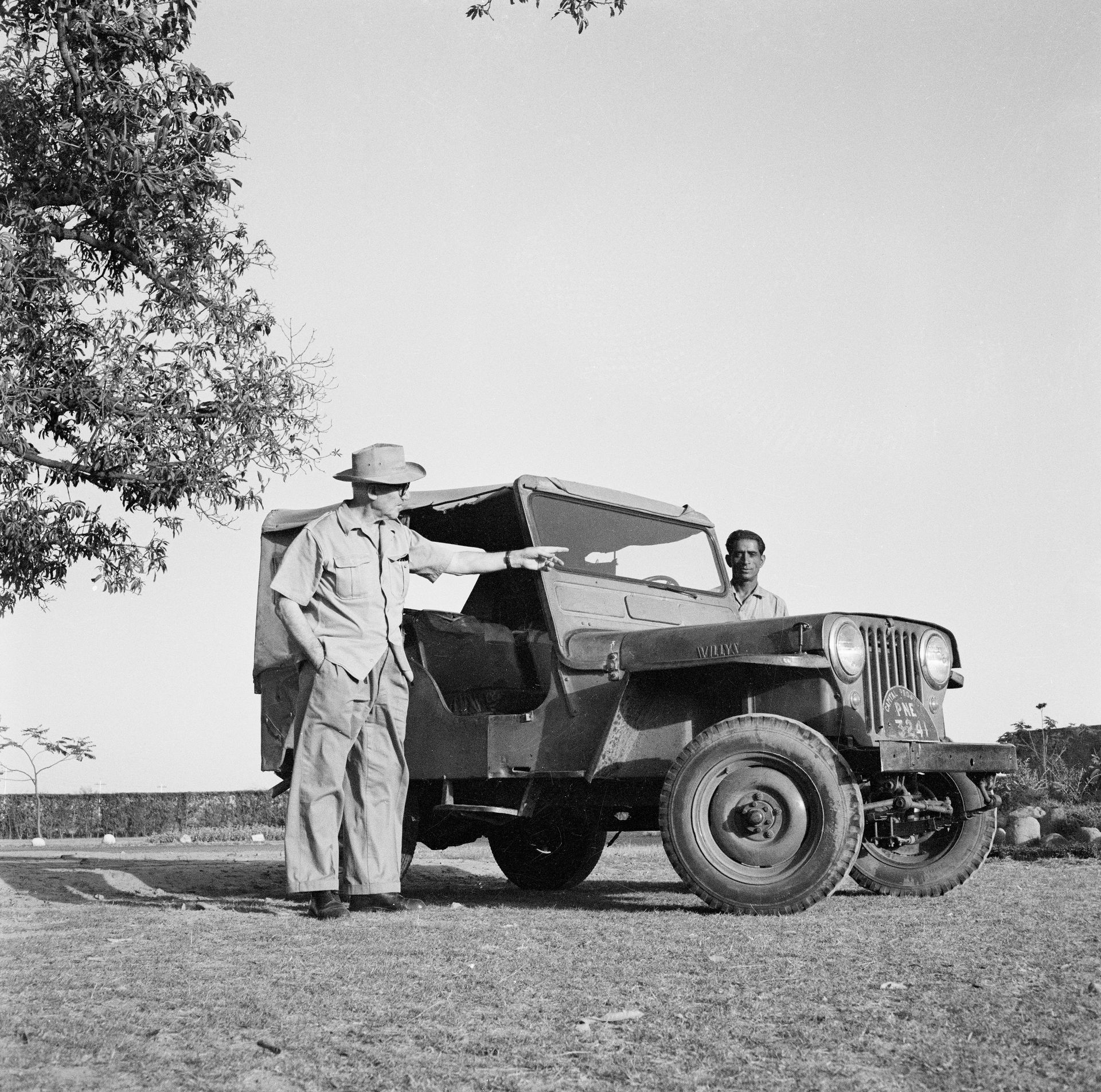
Le Corbusier surveying the ground the city would be built on, photographed by Pierre Jeanneret.
Photograph Pierre Jeanneret, 1951 · CCA collection
1951
A city, and a reason to begin again
Le Corbusier took the plan of Chandigarh and the monuments that crown it, on the condition that he would visit twice a year. Pierre took everything else, and moved.
He stayed fourteen years as the city's chief architect, in a house he drew for himself beside Sukhna Lake. Where Le Corbusier made the Capitol, Pierre made the city people actually used: the housing, the schools, the university, the libraries, and the furniture to fill all of it.
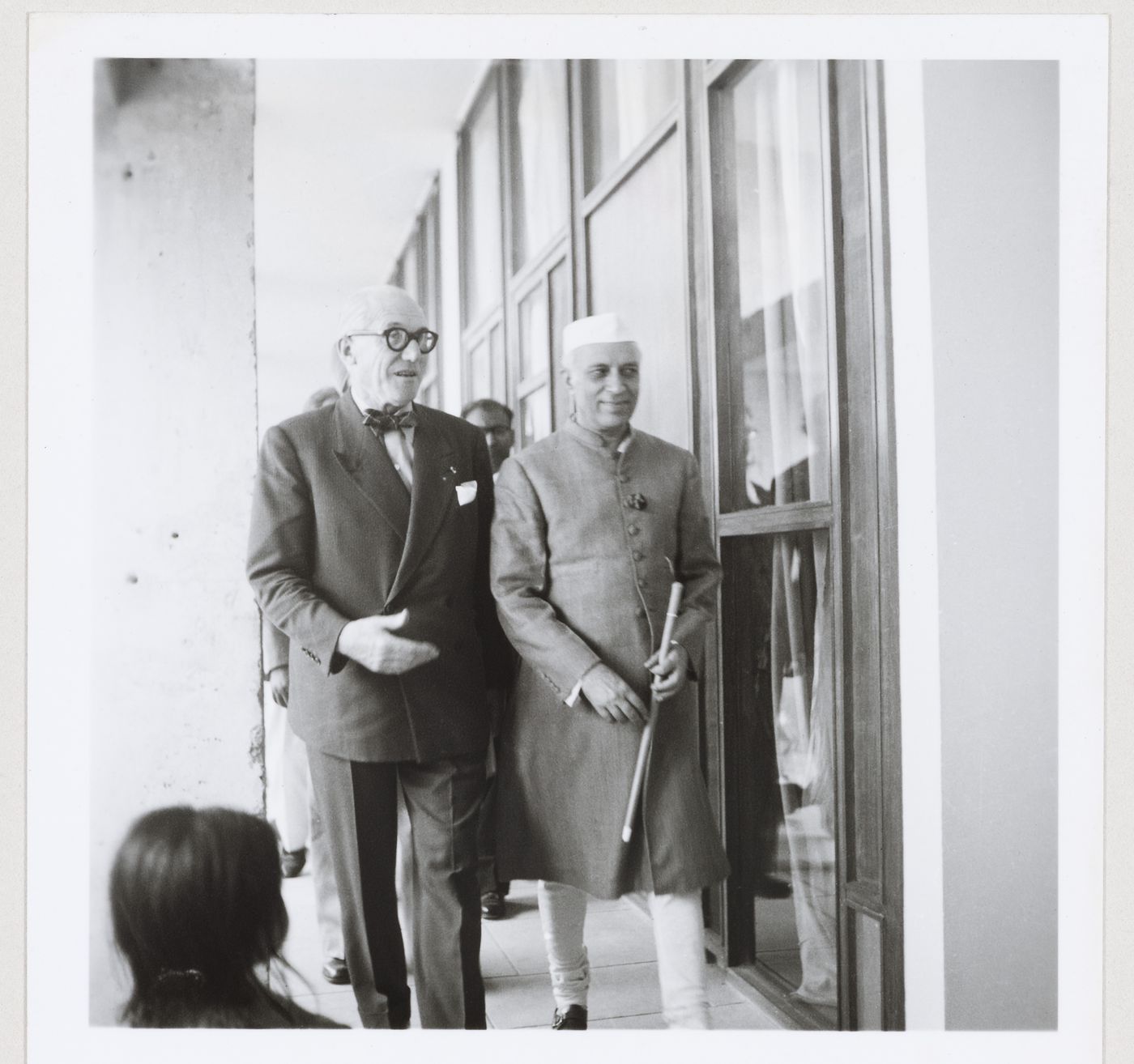
Le Corbusier with Jawaharlal Nehru, who commissioned the city.
Photographer unknown, 1955 · CCA collection
Two temperaments
One left monuments. One left chairs.
The difference between them is legible in what they left behind. Le Corbusier's Chandigarh is concrete at the scale of a state: the High Court, the Secretariat, the Open Hand. Pierre's is a teak chair you can carry under one arm.
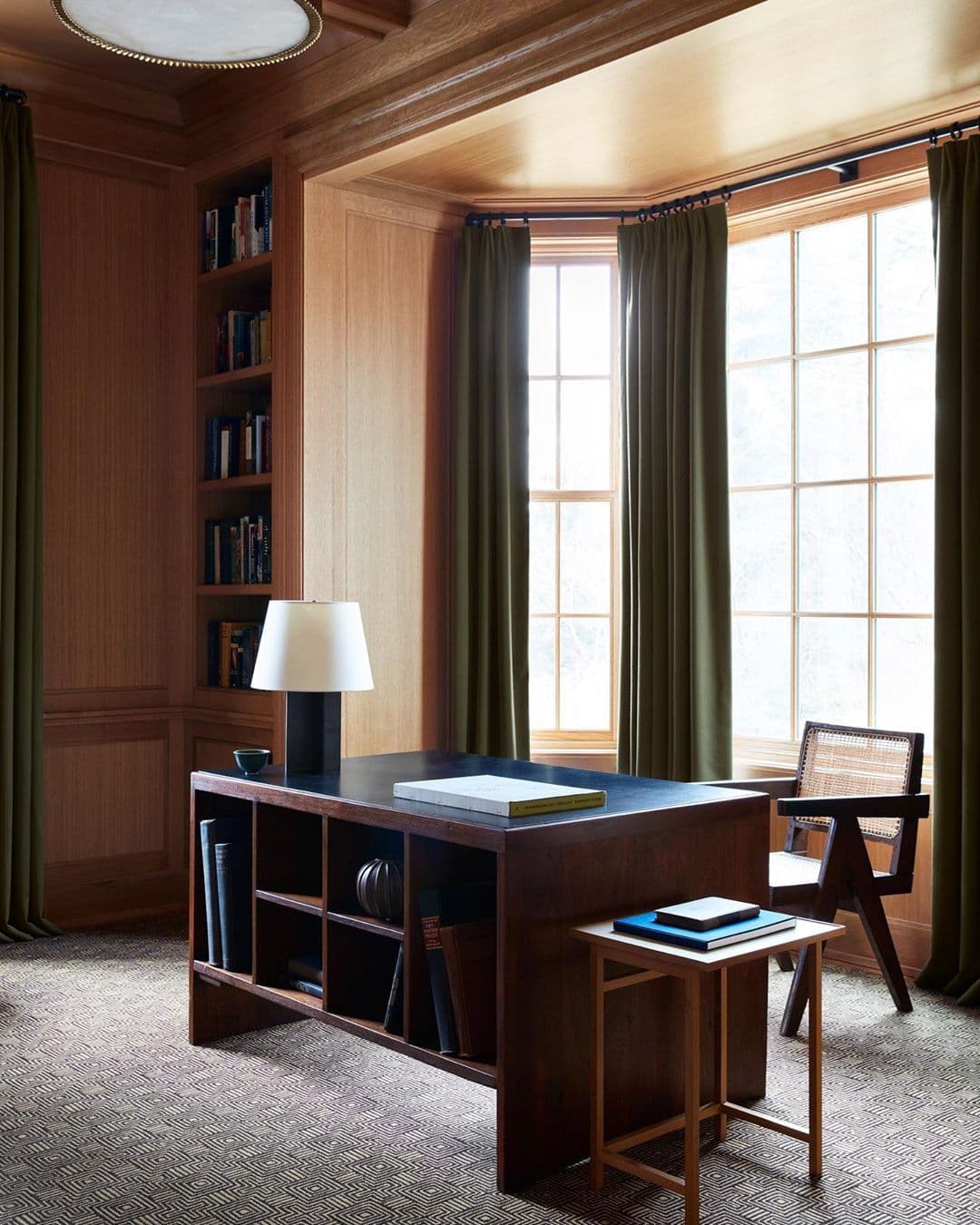
He did not sign the furniture or write about it. He drew it because thousands of rooms were finishing and there was nothing to put in them, and he made it from what the region had, so that it could be repaired by the people who would be using it.
1965 to 1967
The endings
Le Corbusier died in August 1965, swimming in the Mediterranean below his cabin at Roquebrune-Cap-Martin, against his doctor's advice. Pierre left Chandigarh the same year, and died in Geneva in 1967.
He asked that his ashes be carried back and scattered in Sukhna Lake, beside the city he had spent a third of his working life building. They were.
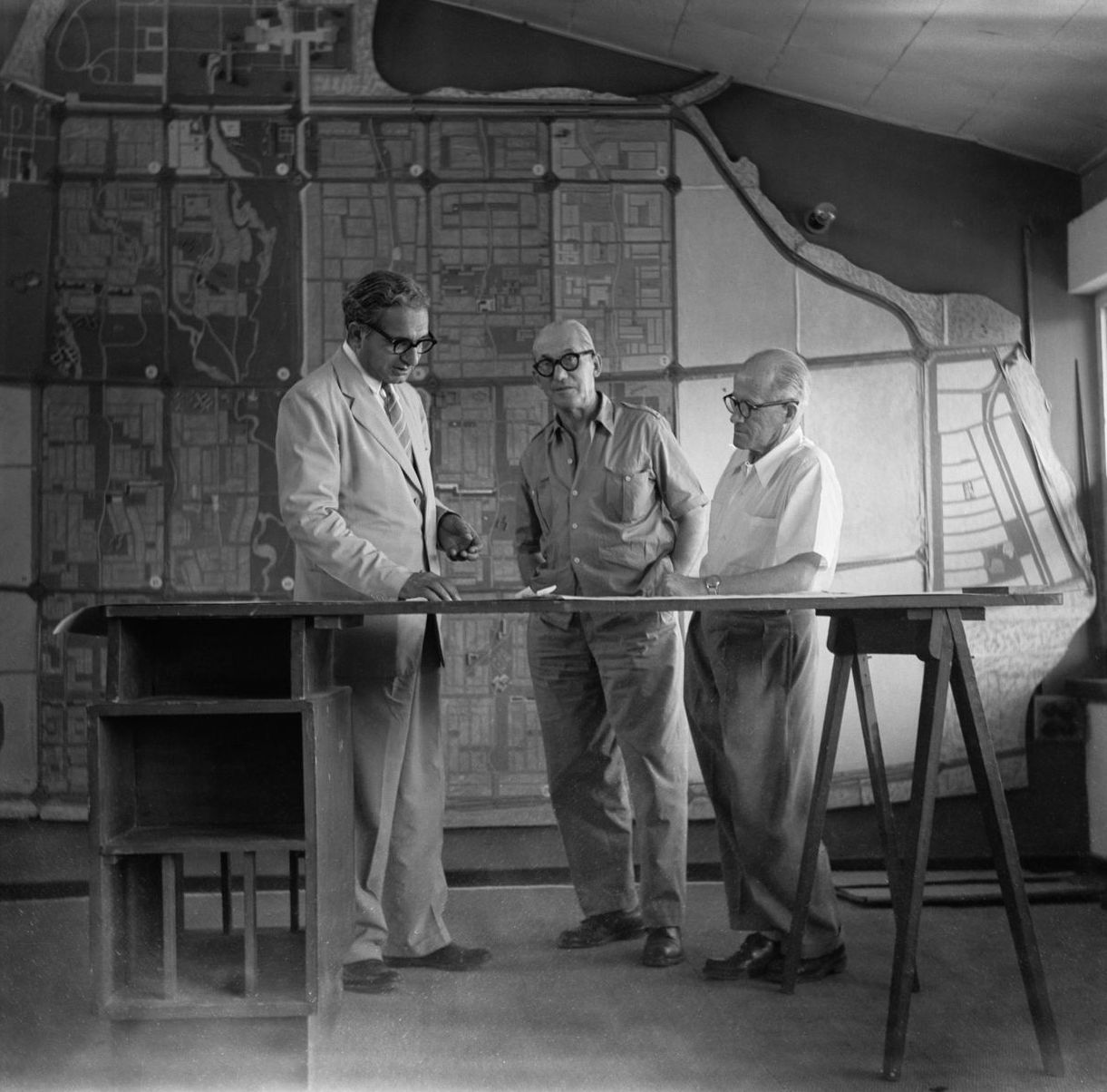
P. L. Varma, Le Corbusier and Pierre Jeanneret on site at Chandigarh.
Photograph Jeet Malhotra, 1955 · CCA collection
“A modest masterpiece, where form seamlessly aligns with function.”
Why we make these
This is a tribute, and nothing more
We designed none of it. Every piece in this catalogue is somebody else's drawing, made again as faithfully as we know how: the same proportions, the same solid teak, the same joints left visible because that is how they were drawn.
We do not sell them as originals. We do not age them to look like originals. We are not adding anything. The only thing we have to offer is the work itself, made properly, by people who make it every week, so that a desk drawn for a government office in 1955 can go back to being a desk somebody uses.
To Pierre Jeanneret, who stayed. And to the men who gave Chandigarh light, air and verdure.
Photographs from the Canadian Centre for Architecture collection, via Wikimedia Commons, where they are tagged public domain in India. Reproduced with attribution to the photographer.